
Can driver fatigue detection actually prevent crashes?
An analysis of whether driver fatigue detection systems can prevent crashes, with data from NHTSA and research on camera-based monitoring technology.
The question of whether a machine can reliably detect fatigue and prevent a crash is no longer science fiction. For any driver who has felt their eyelids grow heavy on a long trip, the danger is intuitive. But for automotive engineers, fleet managers, and safety regulators, intuition isn't enough. They need to know if the technology designed to solve this problem works. The core question is: can driver fatigue detection prevent crashes in a measurable way? The evidence points to a firm "yes," though the full story is more complex, revealing a technology rapidly evolving from a simple alert to a core component of vehicle safety.
"NHTSA's crash investigations and data show that 10 to 20 percent of the police-reported crashes annually involve some form of drowsy driving."
- National Highway Traffic Safety Administration (NHTSA), 2021
How driver fatigue detection aims to prevent crashes
At its core, a driver fatigue detection system is an advanced safety feature designed to identify the warning signs of drowsiness and alert the driver before a critical safety event occurs. The primary goal is intervention. By monitoring a set of physiological and behavioral inputs, these systems aim to break the chain of events that leads from tiredness to a potential collision. Early systems focused on vehicle-based metrics, but modern solutions increasingly use sophisticated camera sensors to watch the driver directly.
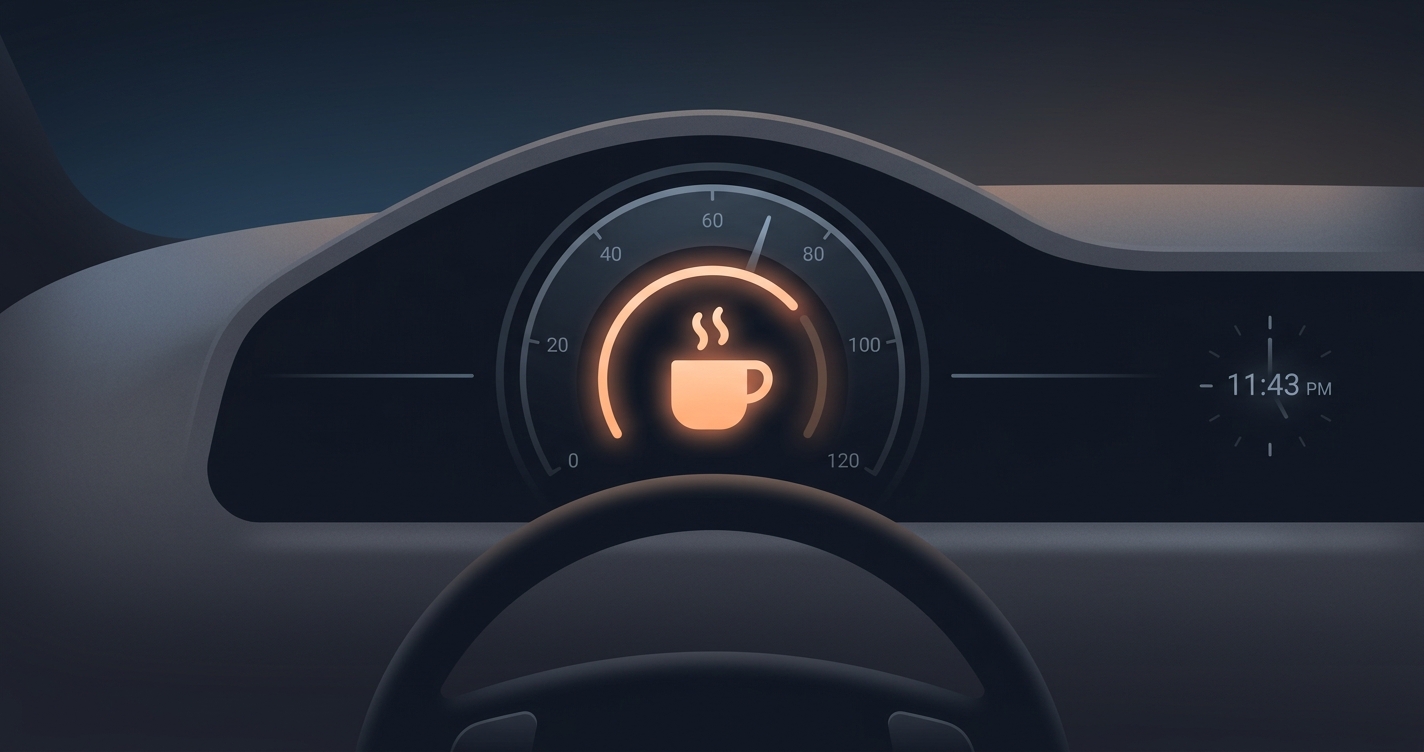
The most advanced systems, often utilizing near-infrared (NIR) cameras, track facial and eye movements that are highly correlated with fatigue. These are signs that a human observer would recognize, but the system can track them with relentless consistency. When a pattern of fatigue is identified, the system can trigger a multi-stage response, from a simple audible chime and a coffee cup icon on the dashboard to more assertive alerts like seat vibration or even initiating a slowdown in coordination with the vehicle's Advanced Driver-Assistance Systems (ADAS). This ability to not just detect, but also to act, is fundamental to how driver fatigue detection prevent crashes.
| Detection Method | How It Works | Common Pros | Common Cons |
|---|---|---|---|
| Camera-Based Monitoring | An in-cabin camera (often NIR) tracks eye closure, blink frequency, head position, and yawning. | High accuracy, direct measurement of physiological state. | Can be perceived as intrusive; requires clear line-of-sight. |
| Vehicle Parameter Analysis | Monitors steering wheel movements, lane deviations, and pedal inputs for erratic patterns. | Non-intrusive, uses existing vehicle sensors. | Indirect measurement; can be prone to false positives from road conditions. |
| Wearable-Based Sensors | A wristband or other wearable device tracks biosignals like heart rate variability and skin conductance. | Direct physiological data, user-specific tracking. | Requires driver to wear a device; introduces adoption friction. |
Industry Applications
The application of fatigue detection is not one-size-fits-all. Its implementation varies significantly between commercial fleet operations and privately owned passenger cars, each with different goals and regulatory pressures.
Fleet management and commercial trucking
For commercial fleets, driver fatigue is a major operational risk and a significant liability. Federal regulations in many countries limit hours of service, but these rules don't account for sleep quality or other factors.
- Real-Time Alerting: Systems can send alerts to both the driver and the fleet manager, allowing for immediate intervention like a mandated rest break.
- Risk Scoring: Data from the fatigue system can be aggregated to create a "fatigue score" for each driver, identifying individuals who may need additional training or schedule adjustments.
- Insurance and Liability: Demonstrating the use of active fatigue monitoring can lead to lower insurance premiums and provides a strong defense in the event of an accident.
Passenger vehicles and automotive oems
In the consumer market, driver monitoring is increasingly being positioned as a premium safety feature, driven in large part by regulatory bodies.
- Euro NCAP Standards: The European New Car Assessment Programme (Euro NCAP) has made driver monitoring a key requirement for achieving a top 5-star safety rating, pushing automakers to integrate these systems.
- ADAS Integration: Fatigue detection adds a critical layer of context to ADAS features. For example, a lane-keeping assist system is more effective if it knows the driver is drowsy versus simply inattentive.
- Convenience and Peace of Mind: For consumers, the system offers peace of mind, acting as a silent copilot that watches for signs of fatigue on long road trips or late-night drives.
Current research and evidence
While official statistics from agencies like the National Highway Traffic Safety Administration (NHTSA) attribute thousands of crashes to drowsy driving annually, researchers widely agree these numbers are significantly underreported. It's difficult to confirm fatigue as a definitive cause post-crash. Research from institutions like the Virginia Tech Transportation Institute (VTTI) has been pivotal in using naturalistic driving studies to show the real-world risk.
A 2018 study by the AAA Foundation for Traffic Safety used in-vehicle camera footage to analyze driver behavior in the moments before a crash. Their analysis found that in 9.5% of all crashes and 10.8% of crashes resulting in significant property damage, airbag deployment, or injury, drowsiness was a contributing factor. This is substantially higher than the 1-2% typically reported in official government statistics. Studies on the effectiveness of detection systems themselves have shown promising results, with some commercial fleet implementations reporting reductions in fatigue-related events by over 30%. The challenge remains in the variability of system performance and the need for continuous algorithm refinement to reduce false alarms and increase driver trust.
The future of in-cabin safety
The technology to driver fatigue detection prevent crashes is evolving beyond simple alerts. The future lies in creating a more holistic understanding of the driver's state. By fusing data from fatigue detection cameras with other sensors, vehicles will be able to differentiate between distraction, drowsiness, and a sudden medical emergency like a heart attack. This "sensor fusion" approach will allow for a more nuanced and appropriate response. Instead of just an audible alert, the vehicle might suggest pulling over, navigating to the nearest rest stop, or in a critical event, activating ADAS to bring the car to a safe stop and call emergency services. This evolution is transforming the fatigue detection system from a single-purpose feature into the sensory core of the intelligent cabin.
For automotive manufacturers and fleet operators, building a comprehensive driver monitoring program is becoming a competitive necessity. As the technology matures, it promises To prevent accidents. To provide a new level of care and safety for the vehicle's occupants. Circadify is actively working with automotive partners to engineer the next generation of in-cabin sensing solutions. If you are an OEM, Tier-1 supplier, or fleet operator exploring this technology, learn more about our custom automotive programs at circadify.com/custom-builds/automotive-cabin.
Frequently asked questions
Q: Can these systems work at night or if I wear sunglasses? A: Yes. Most modern camera-based systems use near-infrared (NIR) illumination and sensors. This allows the camera to see the driver's eyes and facial features clearly even in complete darkness or when the driver is wearing sunglasses that are not NIR-blocking.
Q: What's the difference between driver fatigue and distraction? A: Fatigue is a state of physiological sleepiness, characterized by heavy eyelids, head nodding, and an inability to focus. Distraction is when the driver's attention is diverted from the task of driving, such as by texting or talking to a passenger. Advanced systems can differentiate between the two by analyzing eye-gaze patterns; a distracted driver's gaze is often directed away from the road, while a fatigued driver's eyes may be closed or directed forward but unfocused.
Q: Will my car's fatigue detection system store video of me? A: In most consumer vehicles, no. The systems are designed to process image data in real-time on the device itself (edge computing). They analyze the video feed to extract metadata (like head position or eye closure percentage) but do not typically record or transmit video to protect driver privacy. Policies can be different in commercial fleet vehicles, where recordings may be used for training or incident review.