How does a car know you're having a heart attack before you do?
Explore the technology that allows vehicles to monitor driver vital signs and detect medical emergencies like a heart attack before the driver is even aware.
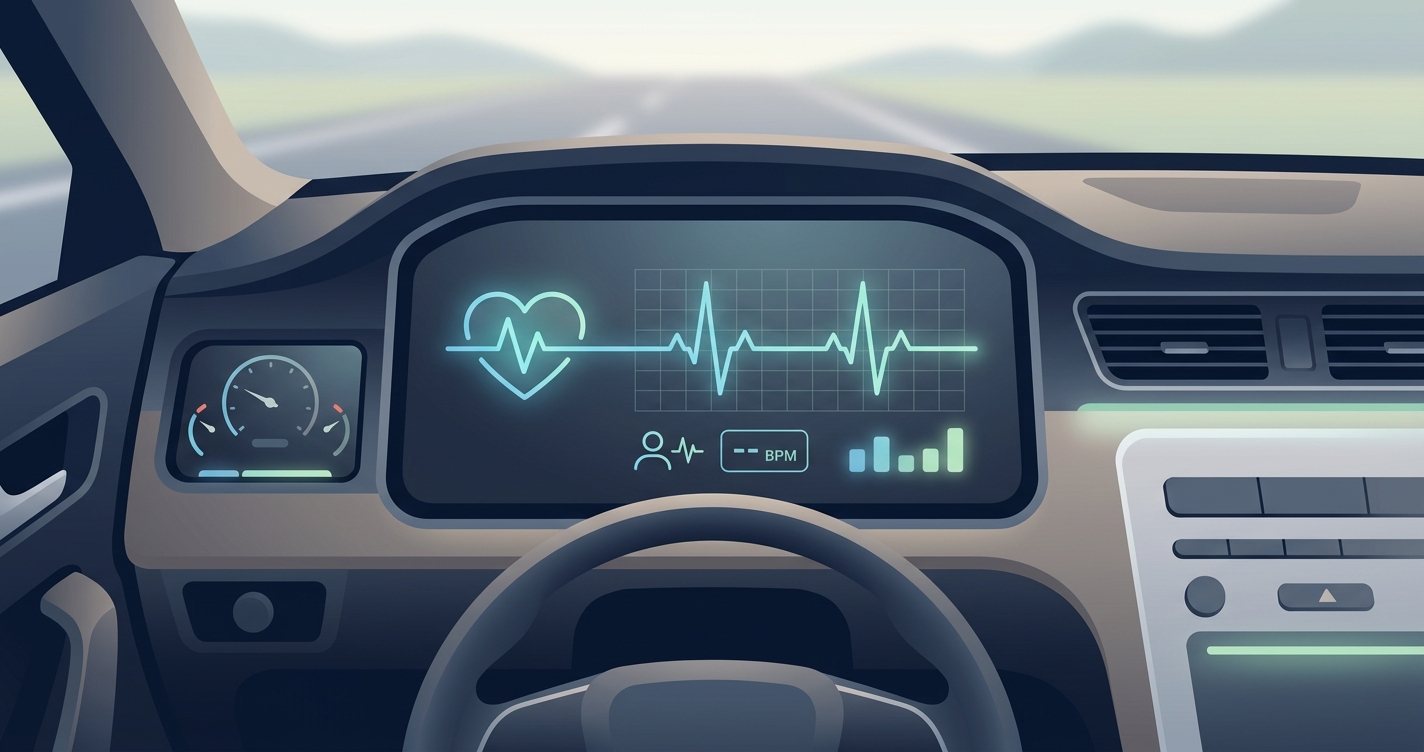
The idea that your car could know you are having a heart attack before you do sounds like science fiction. But as automotive technology evolves, vehicles are becoming sophisticated health monitoring platforms. Moving beyond seatbelts and airbags, the next frontier in automotive safety is proactive, using in-cabin sensors to understand the driver's wellness in real time. This shift from passive safety to predictive, preventative intervention could fundamentally change how we think about road safety and the role a vehicle plays in its occupant's life.
"Cardiovascular conditions are a leading cause of sudden incapacitation for drivers, accounting for a significant number of accidents where a medical event is the root cause." - (European Commission, "New Standards for Driving and Cardiovascular Diseases," 2022)
How a car can detect a heart attack before the driver
The core premise behind a car detect heart attack before driver system is the continuous, non-invasive monitoring of the driver's physiological state. A sudden cardiac event is often preceded by subtle changes in vital signs like heart rate, heart rate variability (HRV), and respiration. The human brain may not register these early warning signs, especially while focused on the task of driving. However, sensitive in-cabin sensors can pick up these fluctuations, providing a critical window for intervention.
This is achieved through several key technologies:
- Camera-based monitoring: Using simple RGB or near-infrared (NIR) cameras, remote photoplethysmography (rPPG) technology can measure a driver's heart rate and respiration rate by detecting minute changes in skin color and chest movements.
- Radar systems: Millimeter-wave (mmWave) radar sensors can be embedded within the cabin to detect the micro-movements of a driver's chest, providing highly accurate heart and respiration data without the need for cameras.
- Embedded contact sensors: Some automotive manufacturers are exploring electrocardiogram (ECG) sensors integrated directly into the steering wheel or seat. These sensors can provide clinical-grade data about the heart's electrical activity.
By analyzing this stream of data with advanced algorithms, the vehicle's driver monitoring system (DMS) can establish a baseline for the driver's normal physiological state. When deviations that correlate with the onset of a cardiac event are detected, the system can initiate a response.
In-cabin cardiac monitoring technology comparison
For automotive OEMs and Tier-1 suppliers, selecting the right sensor modality is a critical decision involving tradeoffs in accuracy, cost, and integration complexity.
| Technology | Method | Vitals Measured | Pros | Cons |
|---|---|---|---|---|
| Camera (rPPG) | Contactless (Remote Photoplethysmography) | Heart Rate, Respiration Rate, SpO2, HRV | Non-intrusive, uses existing DMS cameras | Sensitive to lighting changes, motion artifacts, skin tone |
| Radar (mmWave) | Contactless | Heart Rate, Respiration Rate | High precision, penetrates materials, not affected by light | Potential for interference from multiple occupants |
| Steering Wheel ECG | Contact-based | Electrocardiogram (ECG) | Medical-grade cardiac rhythm data | Requires consistent hand contact on the wheel |
| Seat Sensors (BCG) | Contact-based (Ballistocardiography) | Heart Rate, Respiration Rate | Seamlessly integrated, invisible to the driver | Signal quality affected by posture, clothing, vehicle motion |
Industry Applications
The ability to detect medical emergencies in the cabin is not a one-size-fits-all feature. Its application and implementation vary significantly across different segments of the automotive industry.
Commercial and fleet vehicles
For long-haul trucking, last-mile delivery, and public transit, driver health is an operational imperative. A study on sudden death from ischemic heart disease while driving found that risk factors included overwork, a common issue in commercial driving (T. Matsunaga, et al., 2011). Fleet operators can use this technology to Respond to emergencies. To monitor long-term driver wellness, identifying trends related to stress and fatigue that could lead to future health issues.
Ride-hailing and taxis
In the ride-hailing economy, a driver's incapacitation puts both the driver and the paying passenger at risk. Integrating cardiac monitoring into the vehicle's telematics allows the platform to be alerted instantly. This could trigger a protocol to safely slow the vehicle, alert emergency services with a precise location, and inform the passenger.
Consumer Vehicles
For the everyday driver, this technology acts as a personal safety net. As vehicles become more autonomous, the driver's role shifts from operator to passenger. In-cabin health monitoring ensures that even if the driver is not actively engaged in driving, their well-being is still being supervised. This is particularly valuable for elderly drivers or those with known heart conditions.
Current research and evidence
The development of in-cabin cardiac monitoring is supported by a growing body of academic and industry research. Researchers at institutions like the University of Waterloo have published studies on using millimeter-wave radar for non-contact vital sign monitoring in automotive environments. Similarly, a 2021 study published in the MDPI journal Sensors detailed a system using a near-infrared Time-of-Flight (ToF) camera for robust vital sign monitoring inside a vehicle cabin.
Automakers are also heavily invested. Ford has developed a research prototype of a heart rate monitoring car seat with embedded ECG sensors. Toyota has also been public about its research into steering wheel sensors and camera-based systems to monitor driver health and prevent accidents. These efforts demonstrate a clear industry trajectory toward integrating health-monitoring capabilities as a standard safety feature. The key challenge, as outlined in a review in the journal Applied Ergonomics, is ensuring the robustness of these systems against in-vehicle noise and motion artifacts.
The future of in-cabin cardiac detection
The future of in-cabin health monitoring extends beyond simple alerts. The real value lies in the vehicle's ability to take intelligent, life-saving action. When a car detect heart attack before driver awareness, the logical next step is integration with Advanced Driver-Assistance Systems (ADAS).
- Automated Emergency Maneuvers: Upon detecting a critical cardiac event, the vehicle could activate its emergency braking system, engage hazard lights, and safely pull over to the side of the road.
- V2X Communication: The vehicle could automatically communicate its status and location to emergency services (V2E) and nearby vehicles (V2V), alerting them to the hazard and reducing the risk of a secondary collision.
- Personalized Response: Over time, the system could learn a driver's unique physiological patterns, enabling more personalized and accurate predictions, potentially even suggesting a driver take a break or seek medical advice before a critical event occurs.
This network of sensors, AI-driven analysis, and automated response represents the ultimate evolution of vehicle safety, a car that Protects you in a crash. Actively works to prevent the crash from ever happening.
Frequently asked questions
Q: Can my car really diagnose a heart attack? A: No. The system is not a medical diagnostic tool. It monitors vital signs for patterns that are indicative of a severe medical emergency. Its purpose is to detect a state of driver incapacitation and initiate a safety response, not to provide a diagnosis.
Q: Is this technology available in cars today? A: While many new cars have driver monitoring systems (DMS) for fatigue and distraction, the integration of medical-grade vital signs monitoring is still in advanced stages of development and testing. Some high-end vehicles are beginning to introduce elements of this technology, and it is expected to become more widespread.
Q: What happens with my health data? Is it private? A: Data privacy is a primary concern. Automotive manufacturers are developing stringent data protection protocols. In most architectures, sensitive health data is processed on the edge, meaning directly within the vehicle's hardware, and is not transmitted to the cloud without explicit consent.
The ability for a vehicle to sense the wellness of its occupants is one of the most significant shifts in automotive engineering. Circadify is at the forefront of this movement, developing the camera-based software that enables this new generation of intelligent, life-saving vehicles. To learn more about implementing vital signs monitoring in your automotive program, connect with our team for an automotive program inquiry at circadify.com/custom-builds/automotive-cabin.