What happens when my car flags me as unfit to drive?
When a modern car flags a driver as unfit, it triggers a multi-stage response, from alerts to assisted braking. Here's what drivers and fleet managers should know.
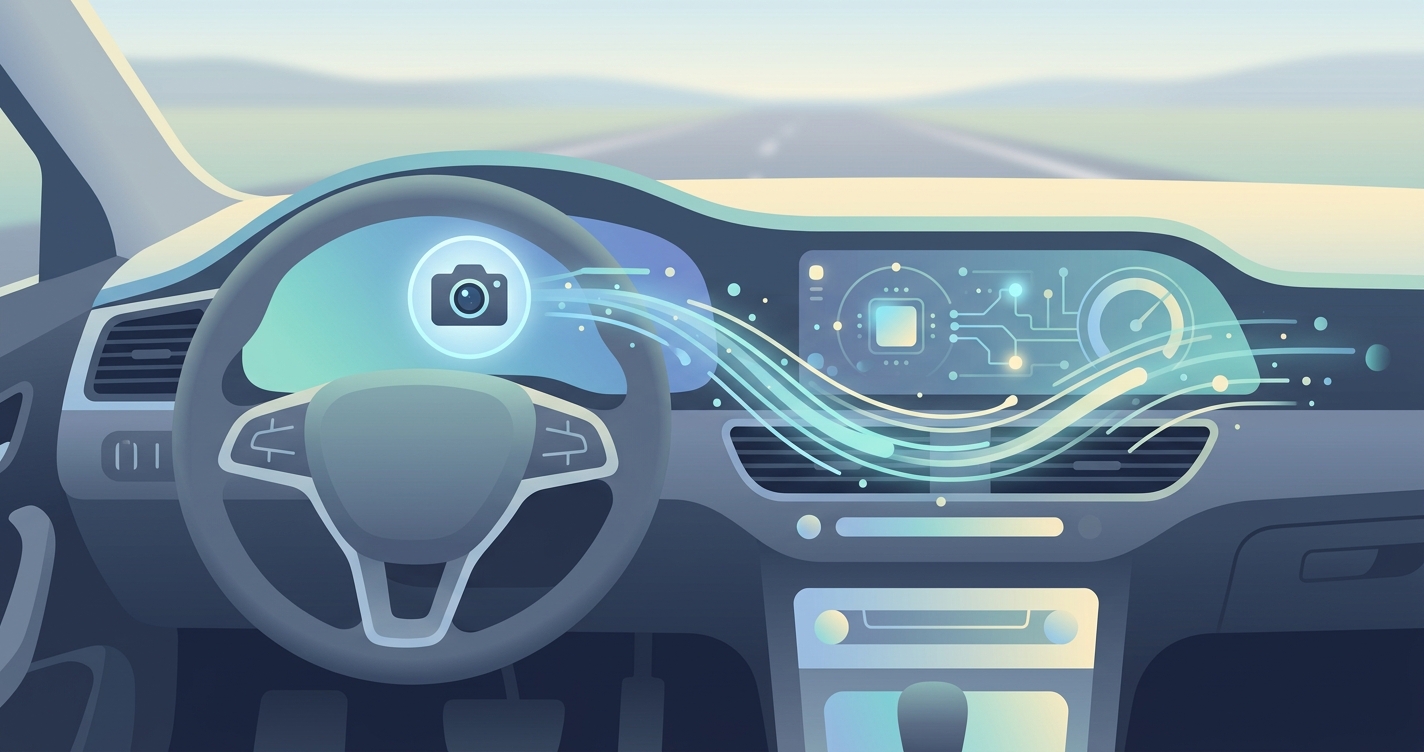
The idea that your car could judge your ability to drive sounds like a far-off concept, but for a growing number of drivers, it's already a reality. Advanced Driver-Assistance Systems (ADAS) are rapidly evolving into comprehensive Driver Monitoring Systems (DMS) that don't just watch the road, but also the person behind the wheel. These systems use a variety of sensors, most notably small, driver-facing cameras, to analyze eye-gaze, head position, and even vital signs. The goal is to identify signs of drowsiness, distraction, or sudden medical distress. This raises a critical question for drivers, their families, and fleet operators: what happens when a car flags unfit to drive behavior?
"The introduction of DMS has been associated with a 69% reduction in moderate to severe instances of distracted driving on fleet vehicles and a nearly 86% reduction in collisions where the driver was distracted." (National Highway Traffic Safety Administration, 2022)
What happens when a car flags a driver as unfit to drive?
When a vehicle equipped with a modern Driver Monitoring System determines a driver is impaired or otherwise unfit to operate the vehicle, it initiates a series of escalating interventions. This is not a single, abrupt event but a carefully designed protocol to manage risk while avoiding unnecessary alarms. The specific actions depend on the system's sophistication, the vehicle's capabilities (e.g., Level 2 or Level 3 automation), and the nature of the detected issue.
Initially, if the system detects mild distraction or the first signs of drowsiness, such as repeated yawning or slowed blink rates, it will issue a subtle alert. This could be a soft chime, a visual icon on the dashboard, or haptic feedback like a vibrating steering wheel or seat. The purpose of these Tier 1 alerts is to gently recapture the driver's attention without causing alarm or annoyance.
If the initial warnings are ignored and the behavior persists or worsens, the system escalates to more assertive alerts. These Tier 2 interventions may include louder, more insistent audio warnings, flashing visual displays, and more intense haptic feedback. Research from institutions like Virginia Tech Transportation Institute has consistently shown that multi-modal alerts (combining audio, visual, and haptic signals) are more effective at getting a driver's attention than a single type of warning.
Should the driver remain unresponsive, the system assumes a high-risk situation, such as a medical emergency (like a heart attack or seizure) or severe incapacitation (like falling asleep). At this stage, the car may engage its advanced driver-assistance features. This can include activating the hazard lights, reducing speed, and using lane-keeping assist to safely guide the vehicle to a stop on the shoulder of the road. In some advanced systems, this action is coupled with an automatic call to emergency services via an integrated eCall or OnStar-type service, providing the vehicle's location and a report of a non-responsive driver. For fleet vehicles, this may also trigger a real-time alert to a fleet manager or dispatcher, enabling a company-level response.
Levels of DMS Intervention
The response when a car flags unfit to drive conditions is not a binary on/off switch. It's a tiered system designed to match the intervention to the severity of the risk.
| Tier | Driver Behavior Detected | Vehicle Response |
|---|---|---|
| 1: Advisory Warning | Brief glances away from the road, yawning, inconsistent lane position. | Subtle visual icon on dashboard, gentle audio chime, or single seat vibration. |
| 2: Escalated Alert | Prolonged eye closure, head-nodding, repeated lane departures. | Louder, persistent audio alarms, flashing lights on the instrument cluster, strong steering wheel or seat vibration. |
| 3: Automated Intervention | No driver response to Tier 2 alerts, erratic steering/braking, slumped posture. | Vehicle slows down, activates hazard lights, may initiate lane-keeping to pull over to a safe stop. |
| 4: Emergency Response | Driver remains unresponsive after vehicle stops or a severe medical event is detected via vital signs. | System initiates an automated call to emergency services (e.g., eCall) and may alert a fleet monitoring center. |
Industry Applications
- Commercial Fleets: For long-haul trucking and last-mile delivery, driver fatigue is a major operational risk. Systems that can reliably detect drowsiness and issue alerts To the driver. To a central fleet manager are invaluable. This allows for proactive interventions, such as scheduling a mandatory rest break. A 2021 study by the AAA Foundation for Traffic Safety found that direct DMS that use a camera are significantly more effective at mitigating driver disengagement than indirect systems that only monitor steering input.
- Ride-Hailing and Taxis: In the gig economy, driver wellness is directly tied to passenger safety. DMS can provide a layer of assurance for passengers and platforms by monitoring for distraction and impairment, helping to prevent accidents before they happen.
- Automotive OEMs: For consumer vehicles, especially those with Level 2 or Level 3 autonomous driving features, DMS is essential for managing the handover of control between the human driver and the car. Regulations in Europe (Euro NCAP) and elsewhere now mandate or heavily incentivize the inclusion of robust DMS.
Current research and evidence
The effectiveness of systems that react when a car flags unfit to drive conditions is a subject of ongoing research. A key study from the National Institutes of Health (NIH) found that combining in-cab warning lights with subsequent supervisory coaching led to the most significant and lasting reductions in risky driving behaviors among commercial drivers. This suggests that the data captured by DMS is most powerful when used as a tool for both immediate alerts and long-term behavior modification.
Another critical area of research is the distinction between different types of systems. The AAA's 2021 report, "Effectiveness of Driver Monitoring Systems," drew a sharp contrast between "direct" and "indirect" monitoring. Direct systems, which use cameras to monitor the driver's state, were found to be substantially better at detecting distraction and issuing timely alerts. In simulated scenarios, direct DMS provided warnings about 50-51 seconds sooner than indirect systems, a critical time difference in an emergency.
Furthermore, the Society of Automotive Engineers (SAE) has emphasized that for Level 2 automated driving systems, a DMS is not just a feature but a necessity. The system must Monitor. Intervene when a driver is not paying adequate attention.
The future of in-cabin monitoring
Looking ahead, the technology is moving beyond simple eye-tracking. The next generation of DMS will incorporate more sophisticated biometric sensing. Camera-based systems are already being developed to measure vital signs like heart rate, heart rate variability (HRV), and respiration rate using a technique called remote photoplethysmography (rPPG).
This allows the vehicle to assess not just distraction and drowsiness but also a driver's physiological state. For example, a sudden spike or drop in heart rate could indicate a cardiac event, prompting the car to initiate an emergency stop-and-call procedure even before the driver loses consciousness. This technology could also monitor stress and cognitive load, potentially adjusting the vehicle's ADAS settings or infotainment displays to reduce mental workload on the driver during complex situations. The fusion of AI and machine learning will enable these systems to learn an individual driver's baseline behaviors and patterns, allowing for more personalized and accurate detection of impairment.
Frequently asked questions
Q: Can I get in trouble if my car flags me as tired? A: In a commercial fleet setting, repeated alerts for drowsiness or distraction could lead to a conversation with a safety manager or mandatory training. For a personal vehicle, there are typically no legal consequences from the system itself, but the alert is a strong warning that you are risking an accident.
Q: What if the system makes a mistake? A: False positives are a key challenge for engineers. Systems are designed with a high threshold for intervention to avoid being overly annoying. Most systems require multiple indicators of impairment over a period of time before escalating to a serious alert or automated action.
Q: Can the driver-facing camera be used for surveillance? A: This is a major privacy concern. Reputable manufacturers and suppliers process the data entirely within the vehicle's local computer (edge computing). The camera is analyzing pixels; it is not "watching" in a human sense, and video is typically not stored or transmitted.
Q: Does my car need a camera to know if I'm tired? A: Some systems, known as indirect DMS, try to infer fatigue from steering wheel movements and lane-keeping. However, research from AAA and other safety groups has shown these are significantly less effective and slower to react than camera-based direct DMS.
As automotive technology continues to advance, the ability for a vehicle to monitor its driver will only become more precise. While the idea of a car flags unfit to drive alert may seem intrusive, it represents a proactive approach to safety, aiming to prevent accidents before they happen. Circadify is at the forefront of developing the camera-based software that makes this analysis possible, providing automotive OEMs, Tier-1 suppliers, and fleet operators with the tools to build the next generation of in-cabin safety. If you're building a driver or occupant monitoring program, learn more about our solutions at circadify.com/custom-builds/automotive-cabin.